Published · Updated · 8 min read
By Camas Bath
The short answer
If you plan to sell a Vancouver, WA home soon, a midrange bathroom update is the scope the data favors: the 2025 Cost vs. Value Report puts a midrange bath remodel at 91% of cost recouped in the Pacific region, against 44.5% for an upscale one. If you are staying for years, payback matters less than how you will use the room.
Key facts
- In the 2025 Cost vs. Value Report, a midrange bathroom remodel recoups 80% of its cost nationally and 91% in the Pacific region, against 42% and 44.5% for an upscale one; no Vancouver, WA market is in the data (Cost vs. Value 2025; Pacific region).
- NAR’s 2025 Remodeling Impact Report estimates that a bathroom renovation recovers about 50% of its cost at sale and adding a bathroom about 56%, with a 9.8 out of 10 owner satisfaction score (NAR Remodeling Impact Report).
- Vancouver, WA splits almost evenly between 41,385 owner-occupied and 40,119 renter-occupied homes in the Census ACS 2020–2024 estimates (Census table B25003, Vancouver city).
- Census ACS 2020–2024 puts the median value of an owner-occupied home in Vancouver, WA at $462,400 (Census table B25077, Vancouver city).
- Detached houses account for 43,238 of Vancouver’s 85,421 housing units, about half, and the city’s median year built is 1988 (ACS 2020–2024) (Census table B25024; Census table B25035).
Key takeaways
- The 2025 Cost vs. Value Report puts a midrange bathroom remodel at 80% of cost recouped nationally and 91% in its Pacific region; an upscale bath lands at 42% nationally and 44.5% in the Pacific region. A universal-design bath comes in at 61% nationally.
- The Pacific region in that report is built from nine cities in California, Oregon and Washington; its Washington cities are Seattle, Spokane and Kennewick. No Portland or Vancouver market is in it, so treat the regional figure as a direction, not a Vancouver number.
- NAR’s 2025 Remodeling Impact Report estimates a bathroom renovation recovers about 50% of its cost at sale and adding a new bathroom about 56%, while rating bathroom renovation 9.8 out of 10 for owner satisfaction.
- Vancouver is close to an even split of owners and renters: Census ACS 2020–2024 counts 41,385 owner-occupied and 40,119 renter-occupied homes in the city, and a median owner-occupied value of $462,400.
- About half of Vancouver’s 85,421 housing units are detached houses (43,238). Roughly 39% sit in buildings of two or more units, which is why condo and townhome bath updates are a real share of local listings.
- About 40% of the city’s housing was built before 1980, and the 1990s are the single largest build decade (17,940 units). The age of the house decides whether a pre-sale update is cosmetic or has to fix ventilation, leaks and wiring first.
Start with your timeline, not the tile
The same bathroom can be a good or a poor investment depending on one thing: how long you will live with it. Resale payback figures measure what a project adds to sale value relative to what it costs. They say nothing about the years of daily use in between. So before choosing finishes, decide which of two owners you are.
- Selling within a year or two: you are spending money mostly for a future buyer and a home inspector. Scope toward what lists well and passes inspection, and keep finishes neutral.
- Staying five years or more: payback is a secondary number. Scope toward how the household uses the room, including accessibility if anyone plans to age in the house.
- Unsure: a midrange scope is the hedge, because it is the version of a bath project that recovers the most of its cost in every dataset cited here.
What the 2025 payback data says, project by project
Two national sources publish bathroom resale estimates, and they measure different things. The Cost vs. Value Report asks real estate professionals to value a standardized project; its Pacific region breakdown averages nine cities in California, Oregon and Washington, including Seattle, Spokane and Kennewick, with no Portland or Vancouver market. The NAR Remodeling Impact Report surveys Realtors and homeowners about broader project categories.
| Project | National | Pacific region | Source |
|---|---|---|---|
| Midrange bath remodel | 80% | 91% | Cost vs. Value 2025 |
| Upscale bath remodel | 42% | 44.5% | Cost vs. Value 2025 |
| Universal-design bath remodel | 61% | not cited here | Cost vs. Value 2025 |
| Bathroom renovation | about 50% | n/a | NAR Remodeling Impact 2025 |
| Add a new bathroom | about 56% | n/a | NAR Remodeling Impact 2025 |
Neither report includes a Portland–Vancouver market. Full context for these numbers is on our resale value data page.
The pattern that holds across both reports
The less finish-heavy version of a bath project recovers a larger share of its cost. An upscale bath can add more total dollars, but in the 2025 Pacific data it recovered less than half of what a midrange one did as a percentage.
Who buys in Vancouver: the housing mix behind the decision
Census ACS 2020–2024 estimates describe a city with a very mixed stock. Of Vancouver’s 85,421 housing units, 43,238 are detached single-family houses and 6,701 are attached homes such as townhouses. Another 33,642, roughly 39%, are in buildings with two or more units, from duplexes to 11,487 units in buildings of 50 or more. Occupied homes split almost evenly between owners (41,385) and renters (40,119), and the median value of an owner-occupied home is $462,400.
That mix changes what a pre-sale bath update looks like. A townhouse or condo bath is usually a fixed footprint where a tub-to-shower swap, vanity and lighting are the realistic scope; check your association’s rules before moving plumbing. A detached house gives more room to rework a layout, which is where buyers compare a walk-in shower in Vancouver against the tub-shower combo many houses still have.
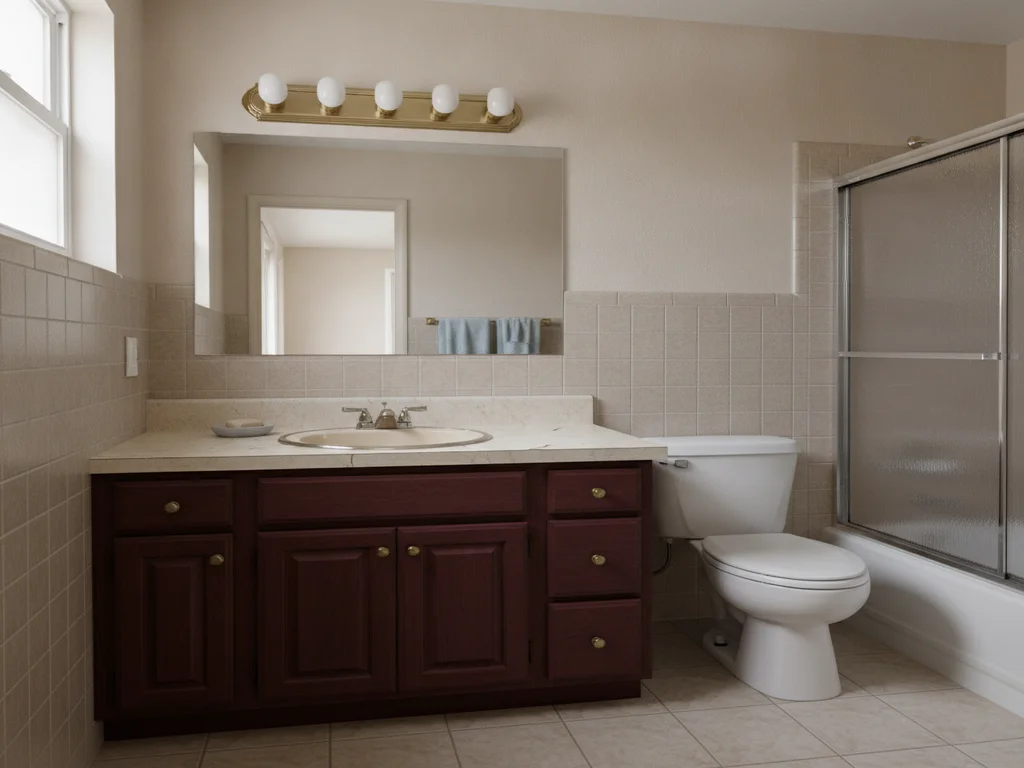
House age decides whether the update is cosmetic
The same ACS tables put the city’s median year built at 1988. About 40% of units (34,367) were built before 1980, with the 1970s alone accounting for 15,474. The single largest decade is the 1990s at 17,940 units, and 12,072 have gone up since 2010.
For a seller, that age split is practical. In a 1950s–1970s house, an inspector is more likely to note an undersized or missing exhaust fan, older supply lines or a tired shower pan, and those findings land in the buyer’s repair requests whatever the tile looks like. Our guide to remodeling bathrooms in older Vancouver homes covers what to check first, and the bathroom ventilation sizing guide covers fans. In a 1990s or newer house, the systems are usually sound and the update is about finishes that read as current in listing photos.
Selling soon: a short pre-listing bath scope
If the sale is near, aim for the midrange row of the table above rather than the upscale one. A sensible order of work:
- Fix anything an inspection will flag: active leaks, soft subfloor at the tub or toilet, failed caulk and grout, a fan that does not vent outdoors.
- Replace dated surfaces that photograph badly: a stained or chipped tub surround, an old vanity top, mismatched fixtures.
- Keep finishes neutral and widely liked; a bold tile choice narrows the buyer pool you are paying to attract.
- Skip work that does not show or will not be valued: layout changes and luxury add-ons are where upscale projects lose their percentage return.
- Pull a permit where one is required, so the work does not become a disclosure or appraisal question; the Vancouver bathroom permit guide covers what triggers one inside city limits.
Staying put: when payback is the wrong yardstick
NAR’s 2025 report gives bathroom renovation a satisfaction score of 9.8 out of 10 even with about 50% cost recovery, which is a useful reminder that owners rate the project on daily use. If you expect to stay, the questions change: does the room work for everyone in the house, and will it keep working as needs change?
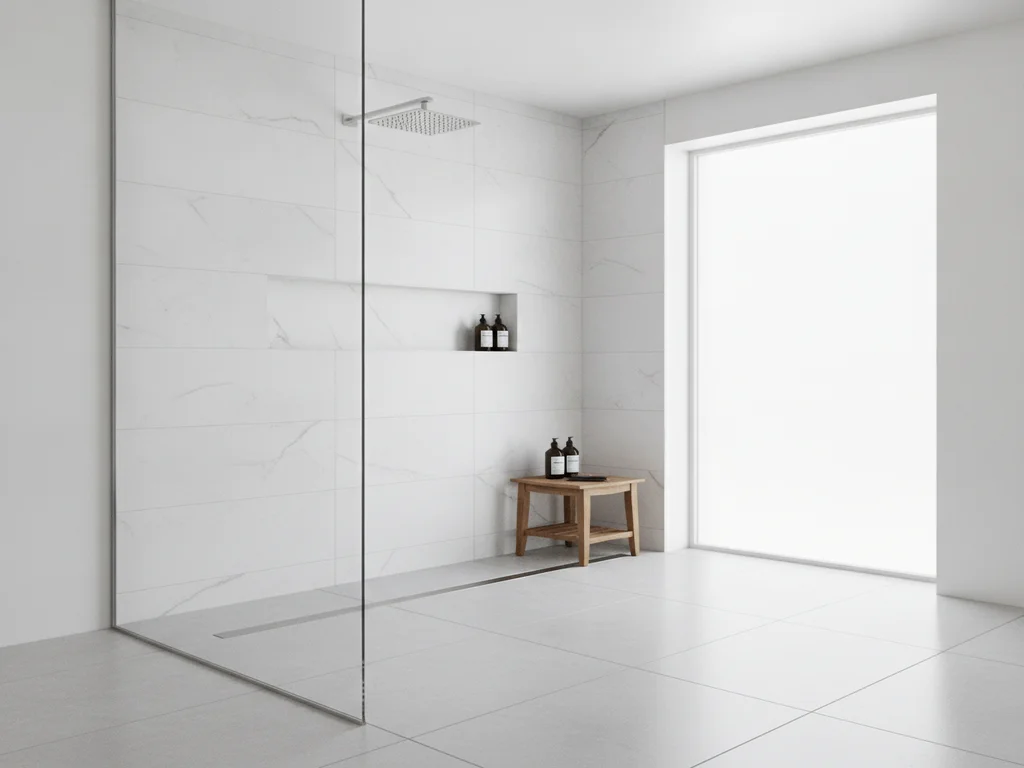
That is where universal-design features earn their place despite a 61% national payback figure: a low or no-threshold shower, blocking for grab bars, a comfort-height toilet and good lighting. Our aging-in-place bathrooms in Vancouver and accessible bathrooms in Vancouver pages describe those scopes.
Adding a bathroom versus improving the one you have
NAR estimates adding a new bathroom recovers about 56% of its cost, a little above its 50% figure for renovating an existing one. Adding a bath means new drain, supply and venting runs plus framing, so it is the larger project of the two. It makes the most sense when a house is short a bathroom for its size and you plan to stay long enough to use it; as a pre-sale move it rarely pencils out on these numbers.
To put real dollars against these percentages, see what a Vancouver bathroom remodel costs, including sales tax and permits. Our published pricing shows how finish tier moves the total. For your own property’s assessed value and building record, the Clark County Assessor has a free parcel search.
Ready to plan your Clark County bathroom?
1-year workmanship warranty · Free in-home consultation
Frequently asked questions
- Should I remodel my bathroom before selling my Vancouver, WA home?
- Fix what an inspection will flag and update dated surfaces at a midrange level; skip an upscale remodel. In the 2025 Cost vs. Value Report, a midrange bath recovered 91% of its cost in the Pacific region against 44.5% for an upscale one. That region averages nine cities in California, Oregon and Washington, with no Vancouver or Portland market.
- Is there a Vancouver-specific bathroom remodel ROI figure?
- No. The Cost vs. Value Report’s Pacific region does not include a Portland or Vancouver market, and NAR reports national figures. Use them as direction, and pair them with your own parcel record and a local agent’s read of current listings.
- Does a condo or townhouse bathroom update pay back the same way?
- The reports do not split results by home type. In practice the scope is different: a fixed footprint limits work to fixtures, surfaces and maybe a tub-to-shower swap, and your association may have rules about plumbing work. About 39% of Vancouver’s housing units are in buildings of two or more units, per Census ACS 2020–2024.
- Does adding a bathroom add more value than remodeling one?
- NAR’s 2025 report estimates about 56% cost recovery for adding a bathroom and about 50% for renovating one. Adding one is the bigger job, so it is usually a stay-long project rather than a pre-sale one.
- Are accessibility features worth it if I might sell?
- On payback alone, a universal-design bath recovered 61% nationally in the 2025 Cost vs. Value Report, below a midrange remodel’s 80%. Their value is to the people living in the house now, so they make the most sense when you plan to stay.
Sources
- Cost vs. Value Report 2025 (JLC) — national
- Cost vs. Value Report 2025 (JLC) — Pacific region
- National Association of Realtors — Remodeling Impact Report
- U.S. Census Bureau — ACS 2020–2024, units in structure (B25024), Vancouver city
- U.S. Census Bureau — ACS 2020–2024, year structure built (B25034), Vancouver city
- U.S. Census Bureau — ACS 2020–2024, median year built (B25035), Vancouver city
- U.S. Census Bureau — ACS 2020–2024, tenure (B25003), Vancouver city
- U.S. Census Bureau — ACS 2020–2024, median value owner-occupied (B25077), Vancouver city
- Clark County, WA — Assessor's Office
Claims and figures are drawn from the sources above and provided for general guidance; your project may vary. For a fixed price on your specific bathroom, request a free estimate.