Updated July 12, 2026 · 9 min read
The short answer
Camas has three distinct housing eras: downtown mill-era Craftsman bungalows (roughly 1900s–1930s), mid-century homes, and newer hillside builds climbing Prune Hill and Grass Valley. Each calls for a different bathroom approach — period-appropriate tile and fixtures for a bungalow, clean geometric tile and warm wood for mid-century, and layout-opening upgrades for builder-grade hillside primary baths.
Key takeaways
- The Craftsman/bungalow style that defines much of downtown Camas dates roughly 1900s–1930s, per the Washington State Department of Archaeology & Historic Preservation (DAHP) — it prized natural materials, quality construction, and simplicity over ornamentation.
- A period-sensitive bungalow bathroom leans on hex or subway tile, natural wood vanities, and warm metal finishes rather than stark, ultra-modern fixtures that fight the house's original character.
- Mid-century homes (per DAHP's Ranch style guide, roughly 1945–1995) suit clean-lined vanities, natural wood and stone, and geometric or pastel tile — This Old House notes hexagon, basket-weave, and bold color remain hallmarks of the look.
- Newer hillside construction on Prune Hill and Grass Valley is often builder-grade: functional but generic. NAHB survey data shows buyers consistently rank a linen closet, a private toilet compartment, and a shower-and-tub combination among the most-wanted primary bathroom features — a useful checklist for what a builder-grade bath may be missing.
- None of this is about a strict costume — NKBA's planning guidelines and This Old House both note that blending eras (a vintage-look tub with a modern faucet, for example) is common practice; the goal is a bathroom that reads as intentional for the house it's in, not accidental.
- Vintage mill-era homes carry older waterproofing and tighter layouts, which changes the remodel scope as much as the aesthetics — see our bathroom vanity buying guide and best shower wall materials guide for how material choice interacts with an older or tighter footprint.
Why the house should drive the bathroom, not the other way around
Camas is unusual for a town its size in how visibly its housing stock spans eras. Walk the grid streets of downtown and you're in a former Georgia-Pacific mill town, with early-1900s homes built for millworkers and their families. Climb Prune Hill or head out toward Grass Valley and the houses get newer fast, ending in subdivisions built within the last couple of decades. In between sit plenty of homes from the mid-century decades, when Camas grew steadily as a working town on the Columbia.
A bathroom remodel that ignores which of those eras it's in tends to look like an accessory rather than part of the house — a starkly modern floating vanity in a 1915 bungalow, or a fussy Victorian clawfoot tub bolted into a 2008 builder-grade primary bath. The fix isn't a strict period costume; it's choosing tile, fixtures, a vanity style, and a layout approach that read as consistent with the house's actual bones.
Downtown Camas: mill-era Craftsman bungalows
Much of downtown Camas is built in the Craftsman/bungalow style that dominated American home construction from roughly the 1900s through the 1930s, according to the Washington State Department of Archaeology & Historic Preservation. DAHP's style guide describes the era's emphasis on quality construction, simplicity, and natural materials over ornamentation — a low, horizontal profile, exposed rafters, and an aesthetic that positioned itself as a deliberate reaction against Victorian excess.
Bathrooms in these homes are often original, or close to it: a clawfoot tub, a small footprint, and plumbing and waterproofing that were never designed for a modern high-flow shower running daily. That combination — genuine period character plus real age-related infrastructure limits — is the defining condition of a downtown Camas bathroom remodel. The style cues that fit best: hexagonal or classic subway tile (a bungalow-era hallmark), a freestanding or furniture-style wood vanity rather than a stark floating one, and warm metal finishes — oil-rubbed bronze, hammered copper, unlacquered brass — in place of chrome or matte black. This Old House notes that even in period remodels, homeowners regularly blend a vintage look with modern components (a period-style tub filled by a reliable modern valve, for instance) rather than chasing museum-piece authenticity.
Mid-century Camas homes
Scattered through Camas's more established neighborhoods are homes from the postwar decades — DAHP's Ranch style guide dates that broad mid-century period roughly 1945 to 1995, characterized by a low-pitched roof, a linear one-story footprint, and an attached garage. These homes were built for everyday function rather than showpiece detail, which is exactly what makes their bathrooms fun to work with: the era tolerates confident color and pattern in a way both older bungalows and newer neutral-toned builds don't.
This Old House's guide to mid-century modern bathroom tile points to hexagons, basket-weave patterns, and the classic "soccer-ball" motif as shapes with proven staying power, alongside a bolder color palette — mint, blush, and other pastels remain a hallmark of the look, often paired with sleeker, more contemporary fixtures rather than an all-vintage reproduction. Natural wood vanities and stone accents complete the look without tipping into full retro pastiche.
Prune Hill and Grass Valley: newer hillside construction
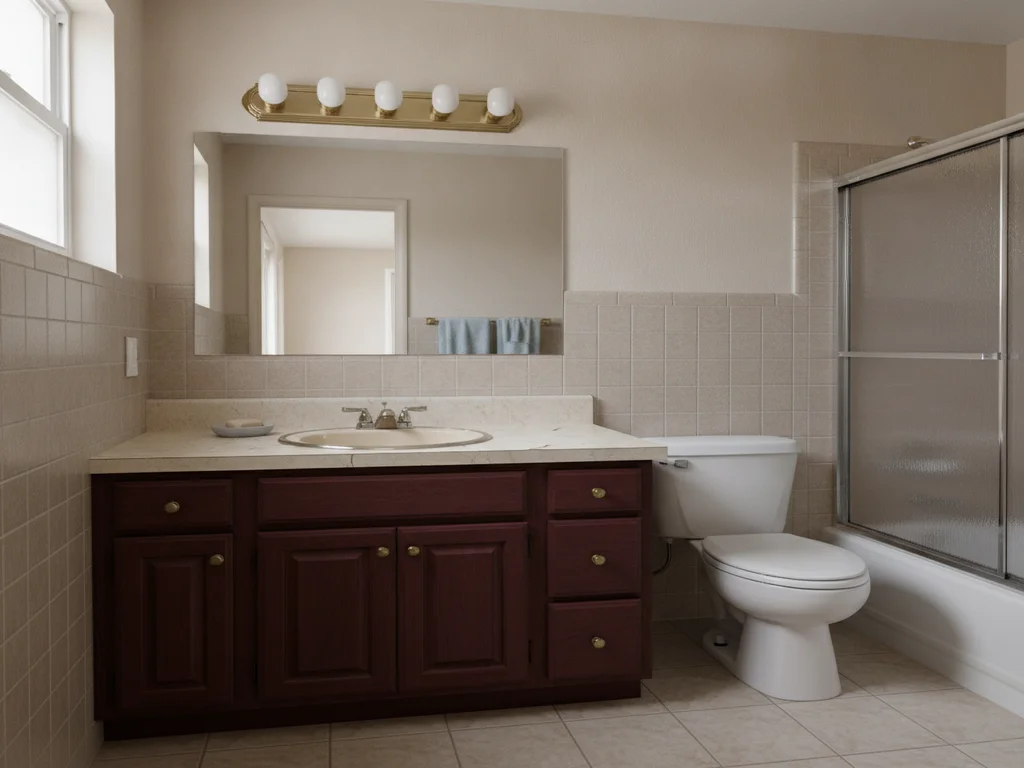
Climbing Prune Hill and out toward Grass Valley, the housing stock is largely newer — subdivision-built homes with primary bathrooms that are functional but often generic: builder-grade tile, a standard-issue vanity, and a layout sized to code minimums rather than how the household actually uses the room. These are usually the strongest remodel candidates in Camas, because the bones (plumbing runs, wall framing, waterproofing) are recent and sound; the upgrade is almost entirely about material and layout quality rather than fixing age-related problems.
NAHB's "What Home Buyers Really Want" survey work is a useful checklist here: a separate shower and tub, a linen closet, and a private toilet compartment are consistently among the most-wanted primary bathroom features nationally — and are exactly the features many production-built hillside primary baths were never given room for. A remodel that reworks the layout to add one of those, alongside upgraded custom tile and stonework and better fixtures, tends to close the gap between "new" and "actually well-designed" fastest.
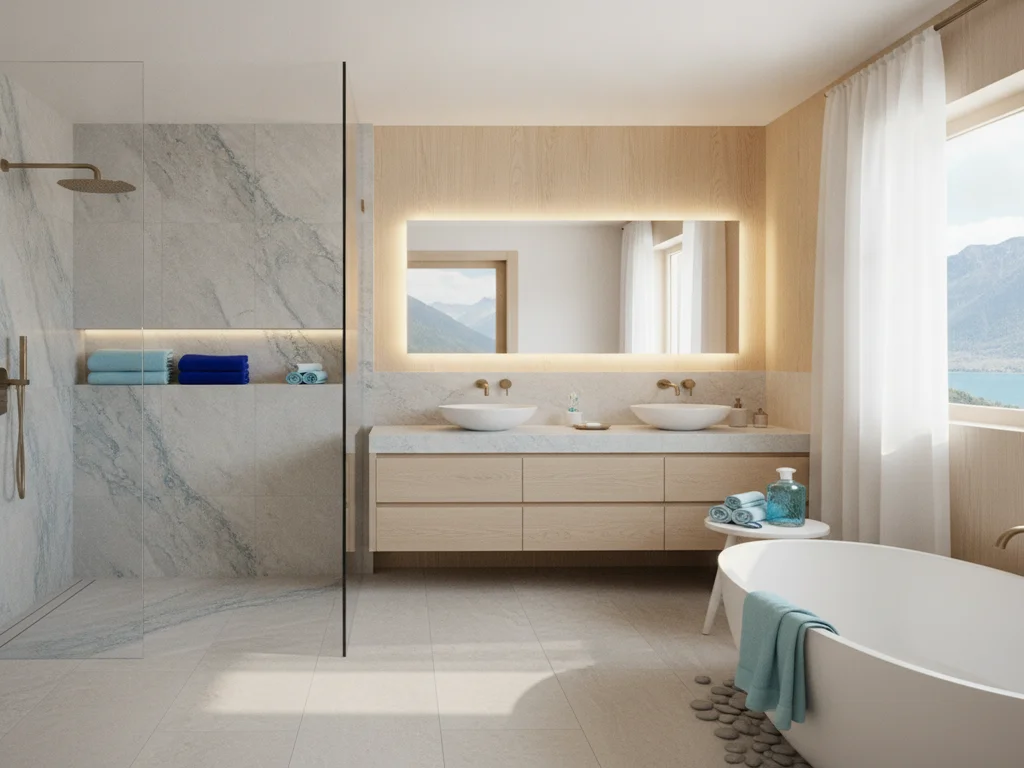
Quick reference: Camas home style, era, and the bathroom look that fits
This is a starting point, not a rulebook — plenty of Camas homes have been added onto or updated across eras, and NKBA's planning guidelines are built around function and clearances that apply regardless of style. But if you're deciding where to start, matching the table below to your home is a fast way to narrow the field.
| Camas home style | Typical era | Bathroom look that fits |
|---|---|---|
| Downtown Craftsman / mill-era bungalow | Roughly 1900s–1930s | Hex or subway tile, freestanding wood vanity, warm metal (bronze/copper/brass) fixtures, clawfoot or slipper tub where the footprint allows |
| Mid-century home | Roughly 1945–1995 | Geometric or pastel tile (hex, basket-weave), natural wood vanity, clean-lined fixtures, confident but controlled color |
| Newer hillside build (Prune Hill / Grass Valley) | Roughly 2000s–present | Layout-first upgrade — separate shower/tub or curbless shower, larger-format tile, double vanity, upgraded storage over builder-grade minimums |
Eras per Washington State DAHP's Bungalow and Ranch architectural style guides. Many Camas homes have been remodeled or added onto across eras — treat this as a starting direction, not a strict rule.
Vanities, fixtures, and hardware: where style actually shows up
Of everything in a bathroom, the vanity and hardware finish do the most work in signaling era, because they're the pieces the eye reads first. A furniture-style vanity with a wood finish and simple hardware reads bungalow or mid-century; a streamlined vanity with integrated storage and a floating profile reads contemporary. Our bathroom vanity buying guide covers sizing, storage, and material trade-offs in more depth, and the bathroom fixtures and hardware guide walks through how faucet and hardware finish choices carry an era's look through the rest of the room.
Tile and shower wall material follow the same logic in a wetter part of the room — a hex-tile floor and subway-tile wall read very differently from a large-format porcelain slab wall, even though both perform equally well against our marine climate. See best shower wall materials for how material choice, waterproofing, and style intersect, and full bathroom remodeling in Camas for how we scope a remodel around the home's existing character.
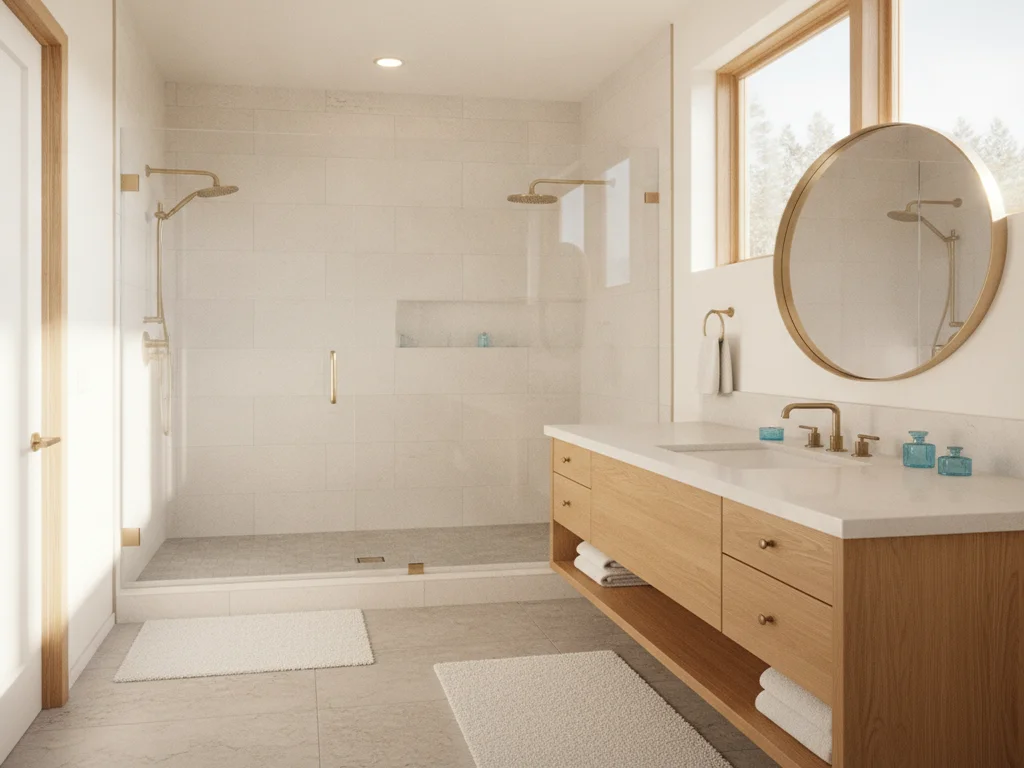
Layout: the constraint bungalows and hillside builds handle in opposite directions
Downtown bungalows and newer hillside homes tend to have opposite layout problems. A mill-era bathroom is often genuinely small and boxed in by load-bearing or plumbing-wet walls, so the win is usually smarter fixture selection and storage within a tight footprint rather than a full gut-and-expand. A newer Prune Hill or Grass Valley primary bath usually has more square footage to work with, but it's often poorly allocated — a large, half-empty floor plan with a cramped shower or no linen storage. There, the win is almost always re-planning the layout itself, which is where NKBA's Kitchen & Bath Planning Guidelines — covering clearances, fixture placement, and storage planning — earn their keep regardless of which style the finishes end up following.
A blended approach is normal, not a compromise
This Old House's vintage-bathroom coverage is explicit that homeowners routinely mix eras on purpose — a period-look fixture with modern plumbing internals, or a vintage tub finish with contemporary hardware. Matching your home's style doesn't mean every element has to be historically exact; it means the overall room reads as intentional for the house it's in.
How Camas Bath approaches this
Because Camas genuinely spans three distinct building eras within a few miles, we start every design conversation by looking at the house itself — its age, its original details (or lack of them), and its layout constraints — before talking finishes. That's as true for a downtown mill-era bungalow as it is for a builder-grade primary bath on Prune Hill or Grass Valley.
Ready to plan your Clark County bathroom?
Licensed & insured · 3-year workmanship warranty
Frequently asked questions
- What bathroom style fits a Craftsman bungalow in downtown Camas?
- Hex or subway tile, a freestanding or furniture-style wood vanity, and warm metal finishes like oil-rubbed bronze or unlacquered brass generally fit best, per DAHP's Bungalow style guide and This Old House's vintage-bathroom coverage. Stark, ultra-modern fixtures tend to fight a bungalow's original low-key, natural-material character.
- Do I have to match my bathroom exactly to my home's original era?
- No. This Old House's reporting on vintage-inspired bathrooms notes homeowners regularly blend eras — a period-look fixture with modern plumbing, for example — rather than chasing museum-level authenticity. The goal is a room that reads as intentional for the house, not a strict historical reproduction.
- What should I upgrade in a newer, builder-grade Prune Hill or Grass Valley bathroom?
- NAHB survey data consistently ranks a linen closet, a private toilet compartment, and a separate shower and tub among buyers' most-wanted primary bathroom features — features many production-built primary baths skip. A layout-first remodel that adds one of these, plus upgraded tile and fixtures, typically closes the biggest gap.
- What defines a mid-century Camas home's bathroom style?
- Per DAHP's Ranch style guide (roughly 1945–1995) and This Old House's mid-century modern tile coverage, think geometric tile shapes (hexagon, basket-weave), confident color including pastels, natural wood vanities, and clean-lined fixtures — bolder than a Craftsman bungalow, less austere than a purely contemporary bathroom.
- Does an older Camas home's bathroom need more than a style update?
- Often, yes. Mill-era downtown homes can carry older waterproofing and tighter original layouts, which affects remodel scope beyond finishes. See our [best shower wall materials](/guides/best-shower-wall-materials) guide for how material and waterproofing choices interact with an older or tighter footprint.
Sources
- WA Dept. of Archaeology & Historic Preservation — Bungalow Architectural Style Guide
- WA Dept. of Archaeology & Historic Preservation — Ranch Architectural Style Guide
- NKBA — Kitchen & Bath Planning Guidelines
- This Old House — Mid-Century Modern Bathroom Tile Ideas
- This Old House — Designing Vintage-Inspired Bathrooms
- NAHB Eye on Housing — Home Buyers Are Looking for Amenity-Loaded Kitchens and Bathrooms
Claims and figures are drawn from the sources above and provided for general guidance; your project may vary. Photography is illustrative of design concepts. For a fixed price on your specific bathroom, request a free estimate.