Updated July 12, 2026 · 9 min read
The short answer
Older Camas homes near the historic downtown mill core typically carry three renovation-relevant issues: galvanized or mixed-metal plumbing prone to corrosion, pre-1940s knob-and-tube wiring that a licensed electrician should evaluate before any wall goes back up, and bathroom waterproofing built to a much lower standard than today's code. A respectful remodel updates what is behind the walls while keeping the scale and character — like a restored clawfoot tub — that make the house what it is.
Key takeaways
- Nationally, the median owner-occupied home is now 42 years old, and roughly 48% of owner-occupied homes were built before 1980 — NAHB data that helps explain why so much remodeling demand nationwide, and in older Camas neighborhoods specifically, is driven by aging housing stock rather than new construction.
- Any home built before 1978 falls under EPA's Renovation, Repair and Painting (RRP) Rule — work that disturbs painted surfaces must be done using lead-safe practices by an EPA-certified renovator, a real legal requirement for a lot of downtown Camas's housing.
- Galvanized steel supply piping, common in homes built before the 1960s, corrodes from the inside out over its 40-50 year service life; This Old House notes older homes commonly still carry cast iron or galvanized piping that was never designed for today's fixtures or water pressure.
- Knob-and-tube wiring predates grounding and modern electrical loads; before a bathroom gets new lighting, a heated floor, or GFCI-protected circuits, a licensed electrician needs to evaluate what is actually behind that wall.
- Building Science Corporation's interior water management guidance recommends bathrooms be built to anticipate water getting where it should not — through wet-room-style construction, insulated supply lines, accessible shutoffs, and non-water-sensitive flooring — a standard most mill-era bathrooms were never built to.
- A City of Camas permit and a WA L&I-registered contractor are both required for the plumbing, electrical, and structural work a real historic-home bathroom remodel typically involves — not just a courtesy step.
Why so much of downtown Camas needs this conversation
Camas grew up around the Georgia-Pacific paper mill on the Columbia River, and the walkable blocks closest to downtown still carry a real concentration of homes built in that early-20th-century mill era — modest footprints, narrow hallways, and, very often, a single full bathroom serving the whole house. That is a different renovation problem than the builder-grade primary baths climbing the newer subdivisions on Prune Hill and Grass Valley, where the layout is usually fine and the upgrade is cosmetic.
It is not a Camas-specific quirk that older homes need more than a cosmetic refresh — it is a national pattern. NAHB reports the median owner-occupied U.S. home is now 42 years old, up from 31 in 2005, and roughly 48% of owner-occupied homes were built before 1980. Downtown Camas's housing stock sits well inside that older cohort, which is exactly why bathroom remodels here so often turn into a conversation about what is behind the wall, not just what is on it.
The plumbing: galvanized pipe and mismatched materials
This Old House notes that homeowners with early-20th-century houses commonly still have cast iron or galvanized steel piping — the standard water-supply material before copper and, later, PEX took over. Galvanized pipe corrodes from the inside as its zinc coating wears away, typically over a 40-50 year service life that mill-era Camas homes have usually well exceeded. The result shows up as reduced water pressure, rust-tinted water, and, eventually, leaks inside a wall you cannot see.
A second problem compounds the first: galvanized pipe connected directly to newer copper fittings sets up galvanic corrosion between the dissimilar metals, accelerating failure right at the joint. A bathroom remodel is the practical moment to address this — once a wall is open for a new shower valve or vanity plumbing, re-piping that run in PEX or copper costs far less than an emergency repair after a wall has already failed.
- Reduced pressure, discolored water, or fluctuating temperature at multiple fixtures are common signs of galvanized pipe nearing the end of its service life.
- Dissimilar-metal joints (galvanized-to-copper) corrode faster than either material alone and are worth flagging for replacement even outside the immediate remodel scope.
- Re-piping while a wall is already open for a remodel is dramatically less disruptive than a standalone repipe project later.
The wiring: what knob-and-tube means for your bathroom plans
Knob-and-tube wiring — porcelain knobs and tubes routing individual conductors through framing, with no ground wire — was standard through the early 20th century and phased out by the 1940s. It still turns up in Camas homes from that era, and a bathroom remodel is one of the most common places it gets discovered, since bathrooms are frequently where a homeowner first wants added circuits: a heated floor, brighter vanity lighting, or GFCI-protected outlets that today's code requires.
Old wiring and modern bathroom loads do not mix safely. Before any new fixture goes in, a licensed electrician needs to evaluate what circuits actually feed that room and whether they can be safely extended or need to be replaced outright. This is not optional scope creep — it is the same reason a permit review exists in the first place.
Lead paint: a real rule for pre-1978 Camas homes
If your home was built before 1978, EPA's Renovation, Repair and Painting (RRP) Rule applies to any paid work that disturbs painted surfaces — trim removal, wall demolition around an old tub, anything that generates dust from old paint layers. The rule requires the firm doing the work to be EPA-certified and its crew trained or supervised in lead-safe practices, specifically to keep lead dust out of the air your family breathes.
This is worth confirming with any contractor bidding a mill-era Camas bathroom before work starts, not after demo has already begun. It is a straightforward box to check, but it is a legal requirement, not a suggestion — and it exists because lead dust from a renovation is a genuine health hazard, not a hypothetical one.
Ask before demo starts
For any pre-1978 Camas home, confirm your contractor is EPA lead-safe certified before the first wall comes down. It is a quick question that heads off a real health and liability issue.
Waterproofing: the standard has changed more than the tub has
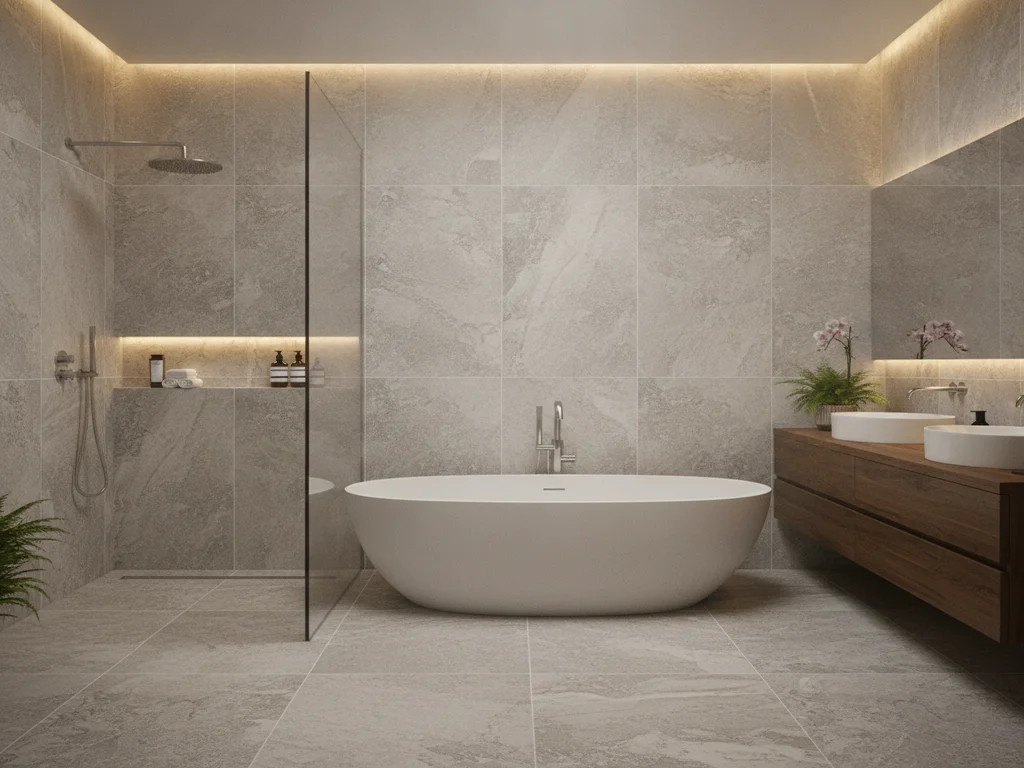
A mill-era Camas bathroom's clawfoot tub or original tile can be original to the house and still be structurally sound — waterproofing is usually the part that has not aged well, because the standard itself has moved so far. Building Science Corporation's interior water management guidance frames the modern approach around anticipating water getting where it should not: full wet-room-style waterproofing rather than a tiled surface with a caulk line as the only real barrier, insulated and accessible supply lines, and flooring in the wet zone that tolerates water rather than just resisting a splash.
That is a meaningfully higher bar than what most bathrooms from this era were built to, and it is worth treating as its own line item rather than assuming new tile automatically means a waterproof assembly underneath it. Our shower waterproofing guide walks through what a membrane system actually needs to do, and it is the standard we hold every full bathroom remodel in Camas to, regardless of the home's age.
What to keep: the clawfoot tub and the character that makes it your house
Not everything old needs to go. A cast-iron clawfoot tub from a Camas mill-era home can often be refinished rather than replaced — the porcelain enamel surface can be professionally reglazed, and the tub itself, built with thick cast iron, generally outlasts most fixtures made today. The plumbing feeding it is a separate question from the tub itself, and often the better answer.
Where a single clawfoot tub no longer fits how a household actually bathes, a tub-to-shower conversion in Camas is the more common outcome — but it does not have to erase the room's character. Trim proportions, fixture finish, and tile scale can all be chosen to sit comfortably in a house built a century ago rather than looking like a showroom insert dropped into an old shell.
Sequencing the remodel so surprises do not blow up the budget
The single biggest risk in an older-home bathroom remodel is not any one of these issues — it is discovering more than one of them after the wall is already open. A remodel that assumes the plumbing, wiring, and waterproofing are all original and untouched, and prices a contingency for that, holds together far better than one that assumes a straightforward cosmetic swap.
That means an early walkthrough matters more here than in a newer Prune Hill or Grass Valley home: identifying pipe material, flagging any visible knob-and-tube, and confirming the home's build year against the 1978 lead cutoff, before a final scope and price are set.
Permits and licensing: not optional for this scope of work
Plumbing re-pipes, electrical work, and structural changes in a Camas bathroom remodel all require a permit from the City of Camas Building Division (616 NE 4th Avenue), which reviews the work against the state-adopted building and plumbing codes. Our Camas bathroom remodel permit guide walks through what triggers a permit and what the timeline typically looks like.
Confirm your contractor separately: Washington L&I requires all contractors to be registered, bonded, and insured under RCW 18.27, and a city cannot legally issue a building permit to an unregistered contractor. Verifying registration before signing anything is a five-minute check that protects you on a project with this much behind-the-wall work.
How Camas Bath approaches an older home
We treat a mill-era Camas bathroom differently from a newer subdivision remodel from the first walkthrough — checking pipe material, flagging wiring for electrician review, confirming the lead-paint cutoff, and pricing waterproofing to today's standard rather than assuming the existing assembly is sound. The goal is a bathroom that works like a modern one and still looks like it belongs in the house it's in.
Ready to plan your Clark County bathroom?
Licensed & insured · 3-year workmanship warranty
Frequently asked questions
- Do I need to worry about lead paint in an older Camas home remodel?
- If the home was built before 1978, yes. EPA's Renovation, Repair and Painting (RRP) Rule requires any paid contractor disturbing painted surfaces to be EPA-certified and use lead-safe work practices. Confirm this with your contractor before demolition starts.
- How do I know if my Camas home has galvanized plumbing?
- Homes built before the 1960s commonly have galvanized steel supply piping. This Old House notes signs include reduced water pressure, rust-colored water, and visible corrosion at exposed pipe. A plumber can confirm pipe material during an inspection, and a bathroom remodel is a practical time to re-pipe an affected run.
- Is knob-and-tube wiring dangerous, and does it need to come out during a remodel?
- Knob-and-tube wiring predates grounding and was not designed for modern electrical loads. It does not automatically need full-house replacement, but any circuit feeding new bathroom fixtures, lighting, or GFCI outlets should be evaluated by a licensed electrician before the work proceeds.
- Can I keep my clawfoot tub during a bathroom remodel?
- Often, yes. Cast-iron clawfoot tubs can typically be professionally reglazed rather than replaced. The plumbing and waterproofing feeding the tub are a separate consideration and are usually where a mill-era bathroom actually needs updating.
- Do I need a permit to remodel a bathroom in an older Camas home?
- Yes, for plumbing, electrical, or structural work — which most older-home bathroom remodels include. The City of Camas Building Division reviews and issues these permits, and Washington law requires the contractor to be L&I-registered before a permit can be issued.
Sources
- NAHB — How Old Is Today's Housing Stock?
- This Old House — 5 Types of Plumbing Pipes
- U.S. EPA — Lead Renovation, Repair and Painting (RRP) Program
- Building Science Corporation — Info-306: Interior Water Management
- City of Camas — Building Division
- Washington State L&I — Hire Smart: Step-by-Step
Claims and figures are drawn from the sources above and provided for general guidance; your project may vary. Photography is illustrative of design concepts. For a fixed price on your specific bathroom, request a free estimate.