Updated July 12, 2026 · 9 min read
The short answer
Ridgefield, WA has two distinct housing stocks needing opposite remodel approaches: century-old homes in the compact historic downtown typically need waterproofing brought up to current standards, plumbing material evaluated, and lead-safe practices if built before 1978; new construction in the I-5 corridor subdivisions usually has sound bones but builder-grade finishes — meaning the work is mostly a material and fixture upgrade, not a behind-the-wall repair.
Key takeaways
- Ridgefield is one of the fastest-growing communities in Clark County along the I-5 corridor, which means new subdivision bathrooms sit within a few miles of a historic downtown that predates them by a century — two very different renovation problems inside one city.
- Homes built before 1978 fall under EPA's Renovation, Repair and Painting (RRP) Rule — any paid contractor disturbing painted surfaces in a historic downtown Ridgefield home must use EPA-certified, lead-safe work practices.
- This Old House notes galvanized steel pipe was standard before mid-century copper and PEX took over; it is more prone to internal corrosion and is heavier and more labor-intensive to replace than modern piping, which is exactly the kind of issue that turns up behind the wall in an older Ridgefield bath.
- NAHB data shows the median new single-family home has been trending smaller since 2015 as builders manage affordability — reflecting the same value-engineering pressure that shows up in a new subdivision bathroom as a smaller footprint and standard-grade fixtures rather than a layout problem.
- Both the City of Ridgefield and Clark County require a permit for plumbing, electrical, or structural remodel work — the same requirement whether the project is re-waterproofing a 100-year-old shower or upgrading a five-year-old builder-grade one.
- A contractor registered with WA L&I is a requirement either way; Washington law does not allow a permit to be issued to an unregistered contractor, regardless of the home's age.
One city, two very different bathrooms
Ridgefield sits beside the Ridgefield National Wildlife Refuge and is one of the fastest-growing communities in Clark County, with new subdivisions rising along the I-5 corridor even as the compact historic downtown a short drive away keeps its early-1900s scale and character intact. That growth pattern means a Ridgefield homeowner calling about a bathroom remodel could be describing a century-old bath with original plumbing, or a five-year-old primary bath in a subdivision off the freeway junction — and those are functionally two different projects.
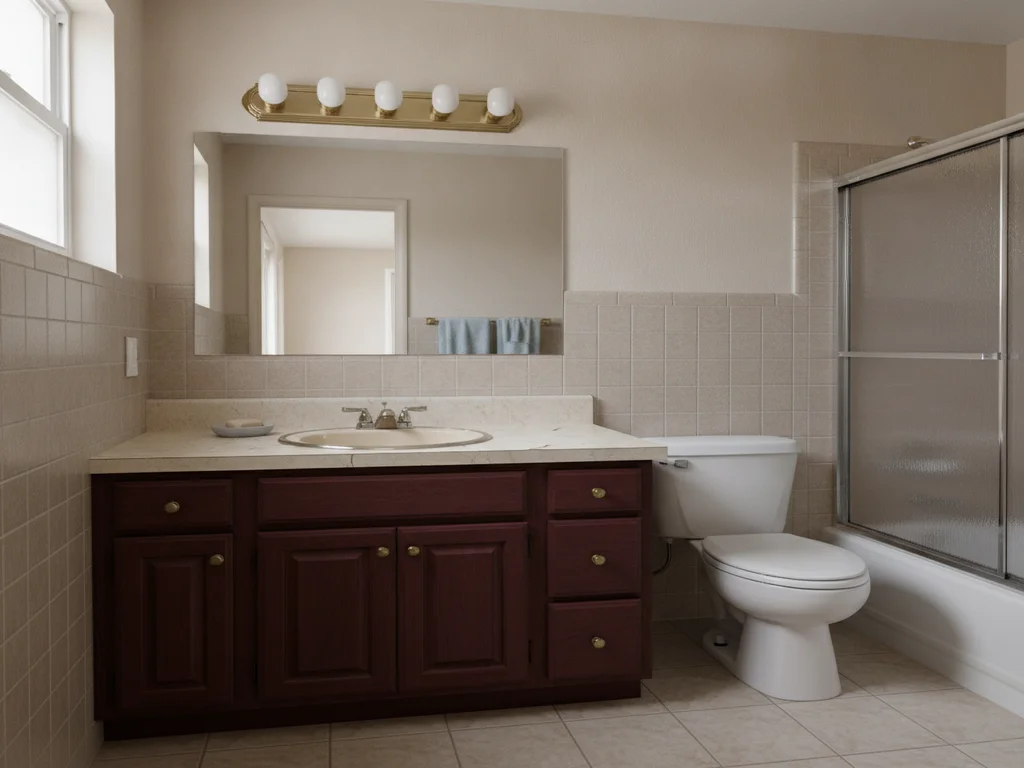
The distinction matters because it changes where the money and the risk actually are. An older downtown Ridgefield bathroom often needs work most homeowners cannot see coming until a wall is open — plumbing material, wiring, waterproofing. A new-construction bathroom usually has none of that risk; the structure, wiring, and waterproofing are code-current, and the remodel is a material and fixture upgrade from whatever the builder specified at the lowest cost that still passed inspection.
Historic downtown Ridgefield: what an older bathroom actually needs
Plumbing material is the first thing worth checking. This Old House notes galvanized steel piping was the standard water-supply material in early-20th-century construction before copper, and later PEX, took over — it is prone to internal corrosion, heavier than today's materials, and more labor-intensive and expensive to remove and replace. Reduced pressure, discolored water, or visible corrosion at exposed pipe are the signs worth flagging before a remodel scope is finalized, since a wall that's already open is the cheapest time to re-pipe an affected run.
If the home was built before 1978, EPA's Renovation, Repair and Painting (RRP) Rule applies to any paid work that disturbs painted surfaces — trim removal, demolition around an old tub, anything that generates dust from old paint layers. The rule requires the firm doing the work to be EPA-certified in lead-safe practices, and it is worth confirming with any contractor bidding a historic downtown Ridgefield bathroom before the first wall comes down, not after.
Waterproofing is usually the least visible and most important gap. A downtown Ridgefield bathroom's original tile or fixtures can be structurally sound while the assembly behind them was never built to a modern wet-room standard — see our shower waterproofing guide for what a proper membrane system needs to do. That is the same standard we hold every full bathroom remodel in Ridgefield to, regardless of the home's age.
New construction in the I-5 corridor: what a newer bathroom actually needs
A bathroom in one of Ridgefield's newer I-5 corridor subdivisions starts from a fundamentally different place. Framing, wiring, plumbing material, and waterproofing were all built to current code within the last several years, so there is typically no behind-the-wall surprise waiting for you — the risk profile that dominates an older-home remodel largely does not apply here.
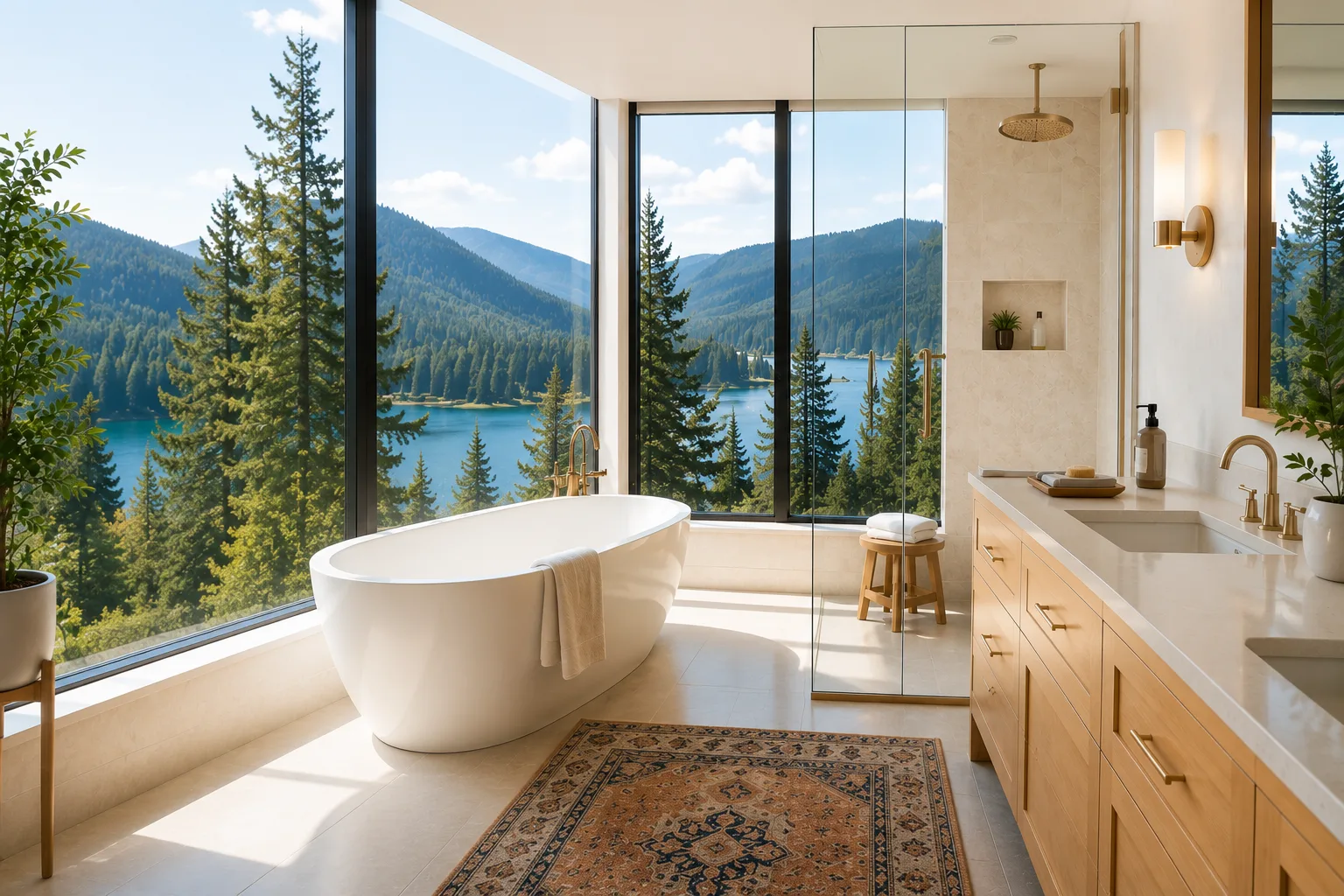
What these bathrooms usually need instead is a finish and fixture upgrade. NAHB data shows new single-family home size has been trending smaller since 2015 as builders manage affordability, and that same cost pressure shows up inside the bathroom: builder-grade vanities, standard-flow fixtures, and entry-level tile chosen to meet a spec sheet and a price point, not to be a finished statement. A remodel here is largely a material swap — real tile and stone instead of a builder's standard package, a better shower valve and showerhead, upgraded lighting and ventilation — layered onto a structure and waterproofing system that is already sound. Our PNW climate materials guide is a useful starting point for choosing finishes that hold up to marine-climate humidity better than a builder-grade default.
A tub-to-shower conversion in Ridgefield is a common newer-subdivision project too — not because the existing tub is failing, but because a builder-installed tub-shower combo is rarely the fixture a household actually wants once they've lived with it.
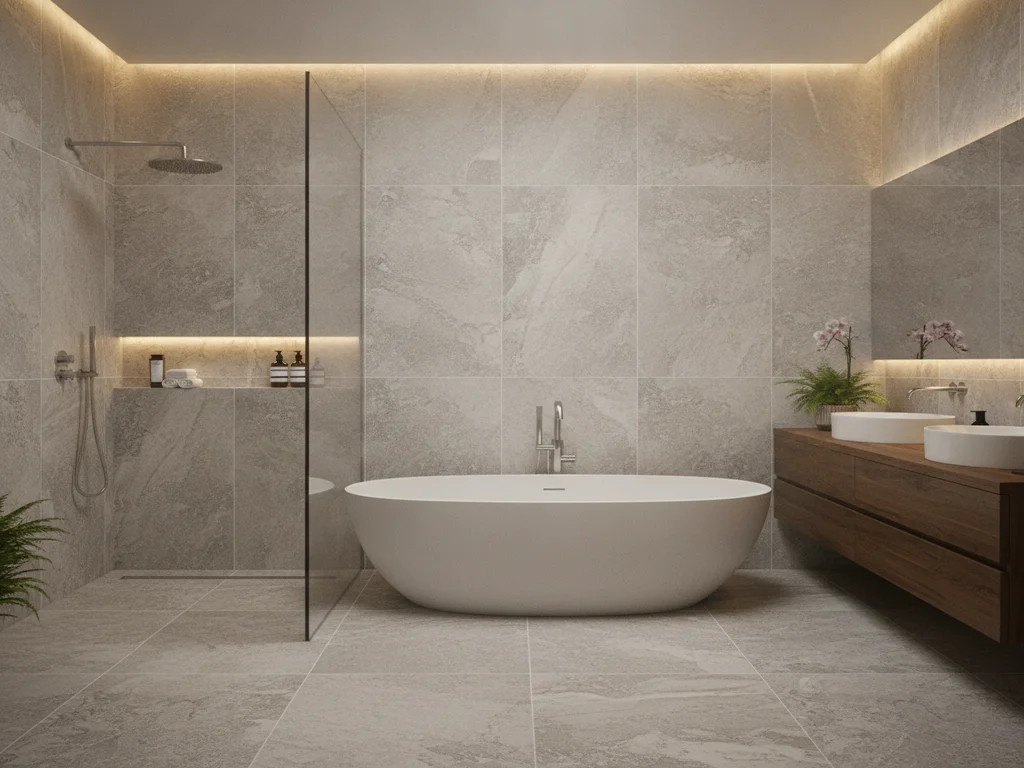
Historic downtown vs. new construction: at a glance
| Home type | Typical era | Typical bathroom needs |
|---|---|---|
| Historic downtown Ridgefield | Early 1900s–1940s | Plumbing material check (galvanized pipe), lead-safe practices if pre-1978, waterproofing rebuilt to current wet-room standard, layout often unchanged |
| Mid-century Ridgefield homes | 1950s–1970s | Mixed plumbing materials, dated ventilation, waterproofing usually below current code, fixtures often original |
| I-5 corridor subdivisions | Recent construction | Sound structure/plumbing/waterproofing, builder-grade tile and fixtures, mostly a finish and material upgrade |
General patterns by construction era, not a substitute for an in-person inspection of your specific home.
Permits and licensing: the same rules for either bathroom
Plumbing, electrical, and structural work trigger a permit in Ridgefield regardless of the home's age. The City of Ridgefield Building & Permitting Services division (510 Pioneer Street Suite B) reviews and issues building permits within city limits; Clark County handles permitting for unincorporated areas nearby, and both require a permit for "additions, alterations and remodels to existing structures" and specifically for installing any plumbing fixture. Purely cosmetic finish work — paint, cabinets, countertops — is generally exempt, but a real bathroom remodel almost always involves more than that. Our Camas-area permit guide walks through what typically triggers a permit and how the review timeline usually runs across Clark County jurisdictions.
Separately, confirm your contractor is registered: Washington L&I requires all contractors to be registered, bonded, and insured, and a city or county cannot legally issue a building permit to an unregistered contractor. That check applies the same way to a century-old downtown remodel and a five-year-old subdivision one.
Same permit rules, different scope of work
A historic downtown Ridgefield remodel and a new-subdivision one both need a permit for plumbing, electrical, or structural changes — the difference is how much of that work an older home actually requires once the wall is open.
The marine-climate constant across both housing types
Age changes what a Ridgefield bathroom needs structurally, but the Pacific Northwest's marine climate is a constant for every home in the city, new or old. Persistent humidity and limited summer drying conditions make ventilation and moisture control a real factor in bath longevity regardless of build year — our moisture-control guide covers what that means for exhaust fans, materials, and drying time in more depth than we'll repeat here.
Waterproofing quality also has a measurable effect on resale, which matters whether you're updating a character-driven historic home or a newer subdivision property before a sale — see our bathroom resale value data guide for what the research actually shows.
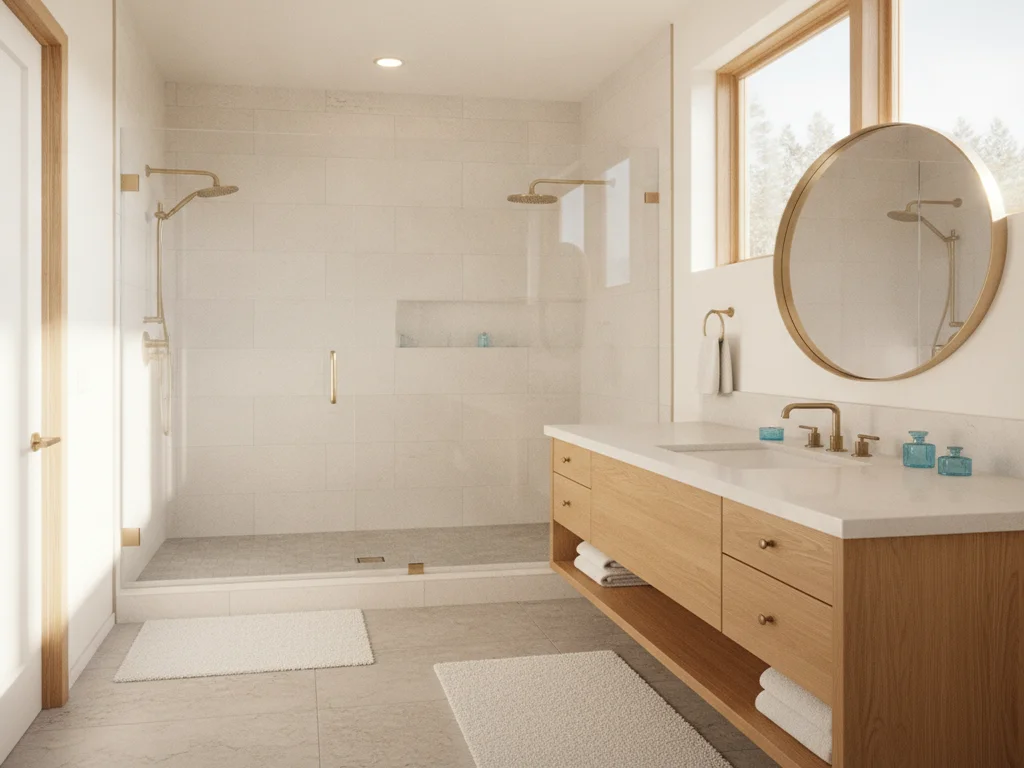
How Camas Bath approaches a Ridgefield bathroom either way
We scope a historic downtown Ridgefield bathroom and a new I-5 corridor subdivision bathroom differently from the first walkthrough — checking pipe material and pricing waterproofing to today's standard in an older home, versus focusing the conversation on fixtures and finishes in a newer one. Same permit process, same WA L&I registration, same marine-climate waterproofing standard either way — just a different starting point.
Ready to plan your Clark County bathroom?
Licensed & insured · 3-year workmanship warranty
Frequently asked questions
- Does my Ridgefield home's age actually change what a bathroom remodel costs?
- It can. Older homes near downtown Ridgefield more often need plumbing, waterproofing, and (if pre-1978) lead-safe work added to the scope, which a newer subdivision home in the I-5 corridor typically does not need. A newer home's remodel cost is driven mainly by the finish and fixture level you choose.
- Is my downtown Ridgefield home old enough to need lead-safe renovation practices?
- If it was built before 1978, yes — EPA's Renovation, Repair and Painting (RRP) Rule requires any paid contractor disturbing painted surfaces to be EPA-certified in lead-safe work practices. Confirm your home's build year and your contractor's certification before demolition starts.
- My subdivision home is new — why would the bathroom already need a remodel?
- New construction is typically built to a cost-managed spec, not a finished-quality one. The structure and waterproofing are sound, but builder-grade tile, standard-flow fixtures, and entry-level vanities are common upgrade targets even in a home just a few years old.
- Do I need a permit for a bathroom remodel in Ridgefield, WA?
- Yes, for plumbing, electrical, or structural changes — which most real bathroom remodels include. The City of Ridgefield Building & Permitting Services division issues permits within city limits; Clark County handles nearby unincorporated areas. Purely cosmetic finish work is generally exempt.
- How do I know if my Ridgefield home has galvanized plumbing?
- Homes built before roughly the 1960s commonly have galvanized steel supply piping. This Old House notes signs include reduced water pressure, discolored water, and visible corrosion at exposed pipe. A plumber can confirm the material, and a remodel is a practical time to re-pipe an affected run.
Sources
- This Old House — 5 Types of Plumbing Pipes
- NAHB — Single-Family Home Size Continues to Decline
- U.S. EPA — Lead Renovation, Repair and Painting (RRP) Program
- City of Ridgefield — Building & Permitting Services
- Clark County — Residential Permits
- Washington State L&I — Hire Smart: Step-by-Step
Claims and figures are drawn from the sources above and provided for general guidance; your project may vary. Photography is illustrative of design concepts. For a fixed price on your specific bathroom, request a free estimate.