Updated July 12, 2026 · 8 min read
The short answer
Designing a Washougal bathroom around the Columbia River or Gorge means solving privacy and glare before layout: use obscure or high-set glass toward neighboring homes while keeping clear glass toward the river or Gorge, orient the freestanding tub or shower to that sightline, and plan for west-facing river glare with low-SHGC glazing or shading rather than blinds that block the view outright.
Key takeaways
- NKBA planning guidelines treat window and door placement as a core layout and clearance decision, not a finishing touch — it has to be resolved alongside the fixture plan, not after it.
- Privacy and view aren't opposing goals on the riverfront: obscure, frosted, reeded, or high-set glass can hold a sightline to the Columbia or the Gorge while still blocking a neighbor's direct view into the room.
- AIA California's daylight-design guidance favors windows on more than one plane (a view window plus a high or clerestory window) over one large picture window — it gets more daylight and more flexibility for privacy screening.
- NFRC's Solar Heat Gain Coefficient (SHGC) and Visible Transmittance ratings are the numbers to check before specifying glass for a west-facing river or Gorge view — a low SHGC keeps a tub-side window from turning the room into a greenhouse on a summer evening.
- A glass shower reads as part of the room and lets a river or Gorge view carry through it; a curbed, fully framed shower blocks more of the sightline than most homeowners expect once tile and hardware are added.
- Washougal splits roughly into older homes near downtown and the riverfront (often with original mid-century window openings and fixtures) and newer subdivisions rising into the Gorge foothills with larger stock windows — the window strategy differs for each.
Start with the sightline, not the fixture list
Most bathroom layouts start with plumbing — where the drain already is, where the vanity fits — and the window gets whatever wall is left over. A Washougal riverfront or Gorge-facing bathroom has to run that backward: figure out the actual sightline to the Columbia River or the Gorge first, from the height of someone standing at the vanity and someone sitting in the tub, and then build the fixture plan around holding that line open.
That's squarely a planning problem, not a decorating one. NKBA's Kitchen & Bath Planning Guidelines treat window and door placement as part of the same clearance and layout framework as fixture spacing — the guidelines exist precisely because a window placed without regard for the rest of the room compromises usability, not just aesthetics. In a river-view bathroom that means checking real sightlines before committing to where the tub, shower, and vanity land, not after.
Window placement and privacy: they are not opposites
The instinct in a bathroom is to treat any window as a privacy problem solved with a blind that stays shut — which also blocks the river. The better approach on a riverfront lot is choosing which parts of the window actually need privacy glazing and which don't, based on the real sightline from outside.
A window facing straight out over the Columbia or up toward the Gorge, with no neighboring rooflines in the sightline, can often stay clear glass. A window that also has a sliver of sightline toward a neighbor's second story — common on tighter downtown Washougal lots — is a candidate for obscure, frosted, reeded, or acid-etched glass in that portion only. Pella's guidance on obscure glass for bathroom windows frames this directly: textured and obscure glass options are built to let light and a general sense of the outdoors through while blocking a clear look into the room, which is a different tool than blocking the window entirely.
AIA California's daylight-design guidance pushes the same idea further: rather than one large picture window doing all the work, design for daylight entering from more than one orientation — a clear view window plus a high or clerestory window. In a Washougal bathroom, that can mean a full-height clear window toward the river or Gorge paired with a smaller, higher window (inherently more private, since it sits above most sightlines) to bring in additional daylight without adding exposure.
- Map the real sightline from outside at both standing and seated eye height before choosing glass type — don't assume a window needs full privacy glazing just because it's a bathroom.
- Use obscure/frosted/reeded glass only where a real sightline problem exists, keeping the strongest river- or Gorge-facing glass clear.
- A high or clerestory window adds daylight with minimal exposure — a strong complement to a lower, clear view window rather than a replacement for it.
- Older homes near downtown Washougal and the riverfront often have smaller, original window openings; newer Gorge-foothills subdivisions typically have larger stock windows that give more room to mix clear and obscure zones in one opening.
Freestanding tubs: orient to the river, not the wall
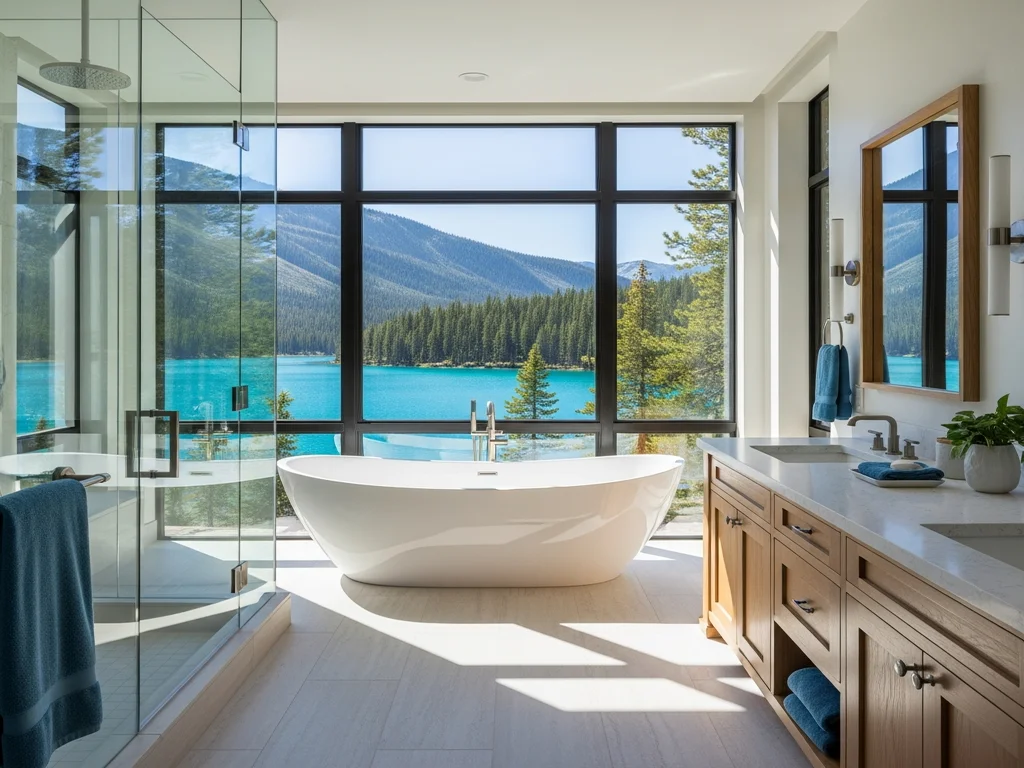
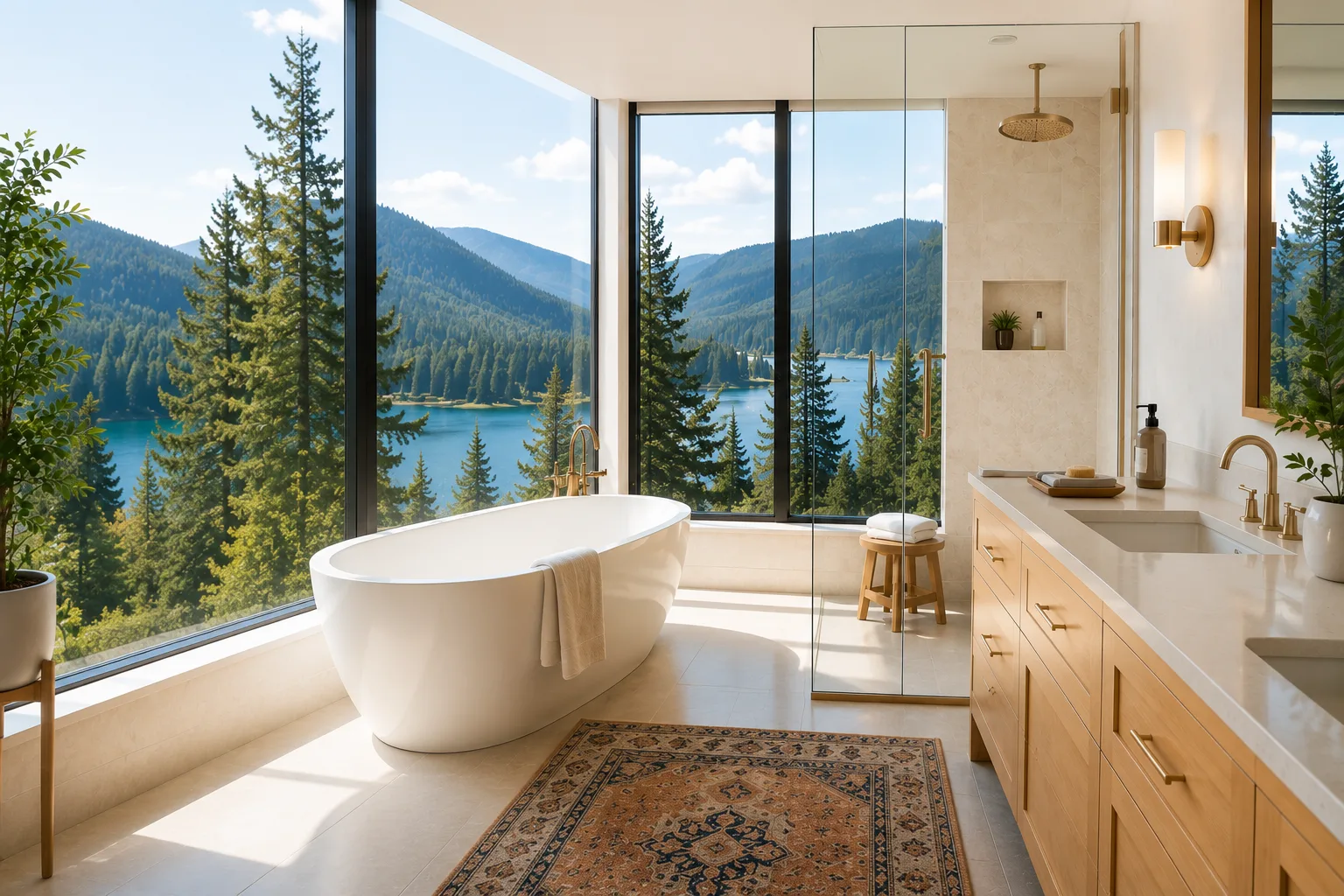
A freestanding tub is the one fixture in a bathroom that doesn't need to sit against a wall, which makes it the natural fixture to orient toward the Columbia or the Gorge rather than toward the nearest plumbing wall. That does mean the water supply and drain need to be planned for the tub's actual position — a freestanding tub with floor-mounted or wall-mounted fillers gives more placement freedom than one built around a fixed in-wall valve.
The other design decision is what sits between the tub and the glass. A low apron or a slight platform can preserve the river view from a seated position in the tub without a full parapet wall blocking the sightline — worth checking at the mock-up stage, since sightlines from seated eye height are lower than most people expect when they're looking at a floor plan.
Glass showers: let the river carry through the room
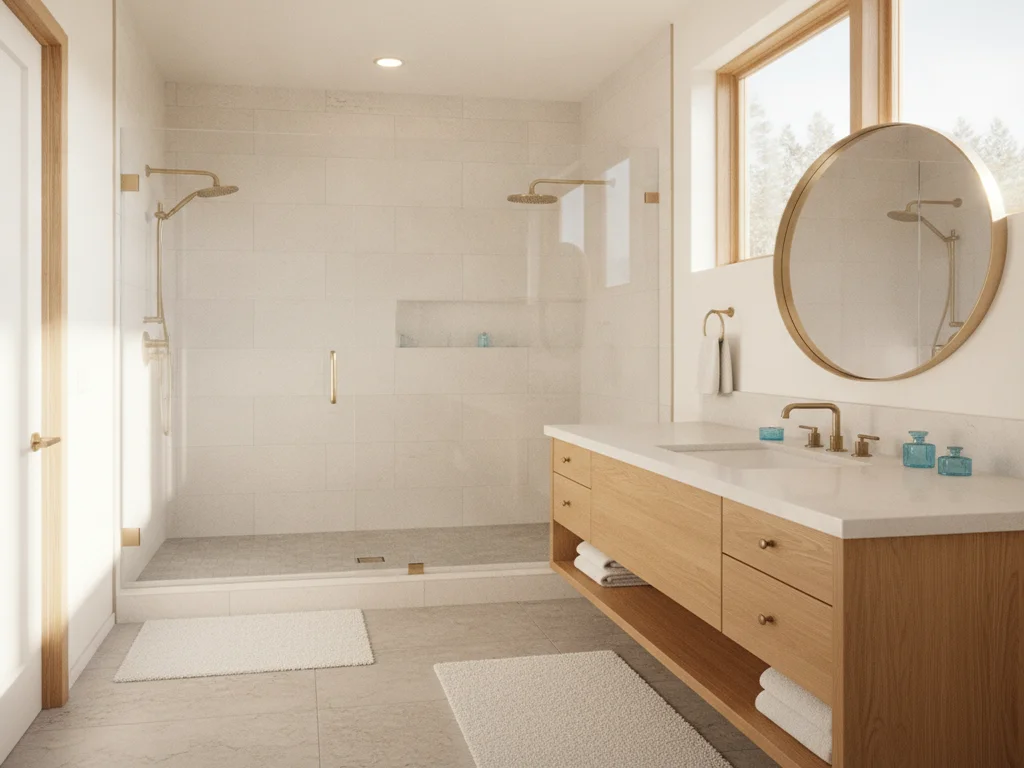
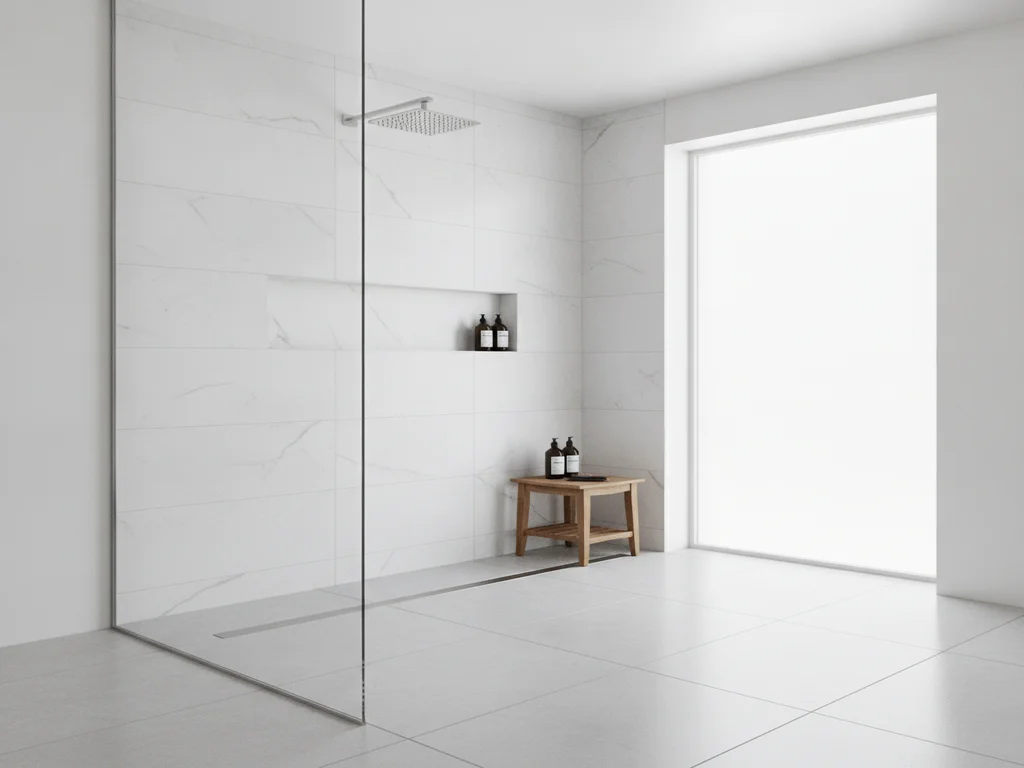
A framed, curbed shower with a solid half-wall reads as a separate box inside the bathroom, and that box interrupts a river or Gorge sightline more than most people expect once tile, grout lines, and hardware are actually installed. A frameless glass shower — especially paired with a curbless entry — keeps the enclosure visually part of the room, so the view carries through the shower area instead of stopping at a wall.
That only works if the glass itself is planned with the same sightline logic as the window: clear glass on the panels that face the river or Gorge, and obscure or frosted glass (or strategic tile) on any panel that faces a shared wall or a neighbor's sightline. Our shower glass enclosure guide covers framed-vs-frameless tradeoffs, hardware finishes, and glass thickness in more depth if you're weighing those decisions for a specific layout.
Glare and orientation: the part west-facing river rooms get wrong
A lot of the best Washougal views face west or southwest — down the Columbia toward Portland, or across the river toward the Gorge in the evening light — which is exactly the orientation that brings the most direct low-angle sun and the most heat gain into a room. Solving privacy and sightlines without also solving glare just moves the problem: the homeowner ends up keeping the blinds shut on summer evenings anyway, which defeats the point of the window.
Glazing has actual ratings for this. NFRC certifies windows for Solar Heat Gain Coefficient (SHGC, the share of solar heat that passes through the glass — lower is cooler) and Visible Transmittance (how much daylight passes through). A west-facing river-view window is a strong candidate for a lower-SHGC glass package specifically to cut evening heat and glare without shrinking the glass or defaulting to opaque coverings — a decision worth making with your window supplier's NFRC label numbers in hand rather than guessing. Exterior or overhead shading (an eave, a pergola, a deciduous tree) is the next-most-effective layer if the window itself can't take a lower-SHGC package, since blocking heat before it reaches the glass works better than trying to manage it once it's inside the room.
Check the NFRC label before you order glass
Every certified window carries an NFRC label with U-Factor, SHGC, and Visible Transmittance printed on it. For a west-facing river- or Gorge-view bathroom window, ask your supplier to compare SHGC options — a lower number cuts glare and evening heat without reducing the size of the view.
Materials that frame the river and Gorge instead of competing with them
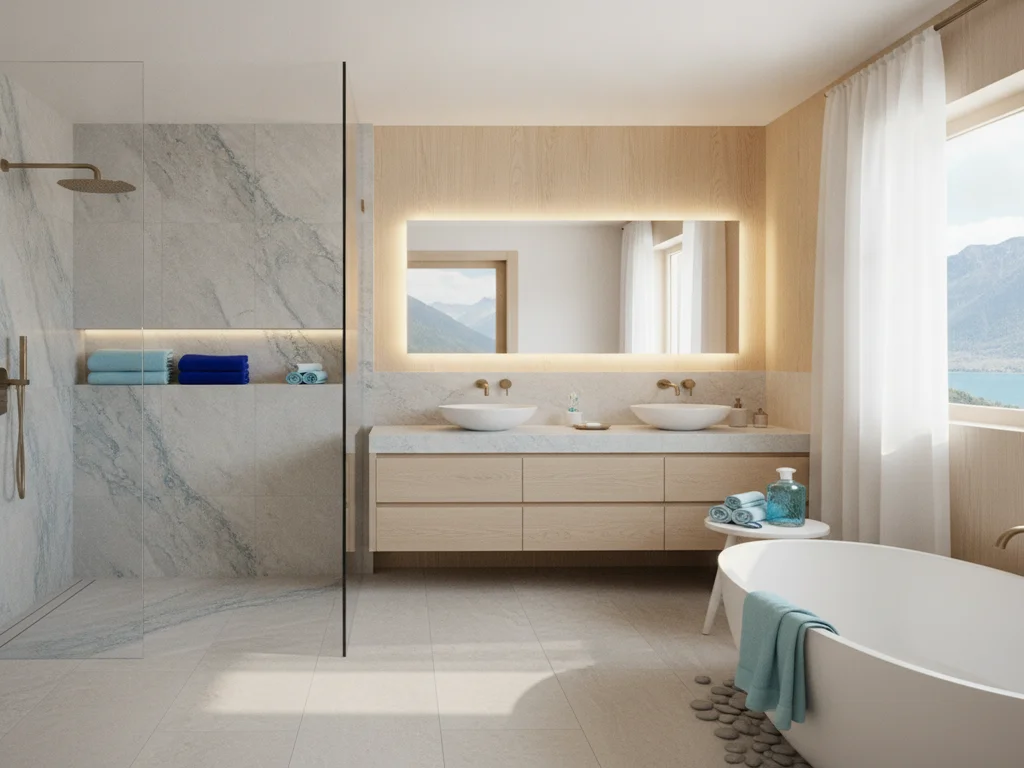
A river-view window is the brightest, highest-contrast element in the room for a large part of the day, and materials that are themselves high-shine or high-pattern can end up fighting it rather than framing it. A quieter, natural material palette — honed rather than polished stone, a tile with a matte or subtly textured finish, cabinetry in a tone that doesn't reflect strongly — tends to let the window do the visual work, which is usually the point in a room built around the Columbia or the Gorge.
That's a material-selection conversation as much as a design one, and it pairs with the mechanical planning above: custom tile and stonework around a view window should account for how much direct light that surface will actually see across the day, since some natural stone finishes can be more prone to visible etching or fading under sustained direct sun than others. It's also worth keeping the palette grounded in the region — natural stone and wood-look tile echo the wool and timber history of the Pendleton Woolen Mills just up the road, without needing to lean on any literal theme.
The vanity and storage still have to work
It's easy to let the window win every layout decision and end up with a vanity wedged into a leftover corner with poor task lighting. NKBA's guidelines exist partly to keep that from happening — vanity clearances, mirror placement relative to any task lighting, and storage still need to meet the same functional standards in a river-view bathroom as in any other. Our bathroom vanity buying guide covers sizing and storage planning in more detail if the vanity is competing with the window for the best wall in the room. A well-planned master bathroom retreat treats the view and the day-to-day function as one project, not two competing ones.
How this plays out differently across Washougal
Older homes near downtown Washougal and the riverfront — many still carrying original mid-century window openings and fixtures — tend to have smaller, tighter footprints, which usually means the highest-value move is maximizing what's already there: mixing clear and obscure glass within one existing opening, adding a second smaller window if the wall allows it, and keeping the shower glass frameless so the small room doesn't feel boxed in. Newer subdivisions rising into the Gorge foothills more often have larger builder-grade window openings already aimed at a river or Gorge view, where the bigger lever is usually glazing performance (SHGC) and privacy zoning within that larger pane rather than adding window area.
Either way, the planning sequence is the same: confirm the sightline to the Columbia or the Gorge, decide where privacy glazing is actually needed versus assumed, check the glazing's SHGC rating for the orientation, then build the fixture layout — tub, shower, vanity — around holding that view open. Washington's marine climate adds one more layer on top of the view planning: any window or glass shower near the river needs the same ventilation and moisture-control discipline as any other PNW bathroom, covered in our marine-climate moisture control guide and ventilation CFM guide.
Ready to plan your Clark County bathroom?
Licensed & insured · 3-year workmanship warranty
Frequently asked questions
- Can a bathroom window face the Columbia River and still be private?
- Yes — privacy and view aren't solved with the same glass across the whole window. Obscure, frosted, or reeded glass on the portion of a window with a real sightline problem (toward a neighbor, for example) can coexist with clear glass on the portion that faces the river or Gorge.
- Does a glass shower ruin bathroom privacy near a riverfront window?
- Not if the glass is specified with the same sightline logic as the window itself: clear glass toward the river or Gorge, obscure or frosted glass on any shower panel that faces a shared wall or a genuine outside sightline.
- Why does a west-facing river or Gorge view bathroom get so hot and glary?
- West-facing glass takes the most direct, low-angle evening sun off the river. NFRC-rated glazing with a lower Solar Heat Gain Coefficient (SHGC), or exterior shading like an eave or pergola, cuts that heat and glare without shrinking the window or blocking the view with closed blinds.
- Should the tub or the shower get the best view in a Washougal bathroom?
- There's no universal answer — it depends on which fixture the household actually uses for relaxation versus quick daily use. A freestanding tub is easier to orient toward a view since it isn't tied to a wall, while a glass shower can carry a view through it if the enclosure is frameless and clear-glazed on the view-facing side.
- Do older Washougal riverfront homes need a different window strategy than Gorge-foothills homes?
- Generally yes. Older riverfront and downtown homes tend to have smaller, original window openings, so the priority is usually maximizing what exists with mixed clear/obscure glazing in one opening. Newer Gorge-foothills subdivisions more often already have larger builder-grade windows aimed at a view, so the bigger lever is glazing performance and privacy zoning within that larger pane.
Sources
- NKBA — Kitchen & Bath Planning Guidelines
- AIA California — Design for Daylight and Views
- National Fenestration Rating Council (NFRC) — Window Ratings (SHGC, U-Factor, Visible Transmittance)
- Pella — Obscure Glass Windows for Bathroom Privacy
Claims and figures are drawn from the sources above and provided for general guidance; your project may vary. Photography is illustrative of design concepts. For a fixed price on your specific bathroom, request a free estimate.