Published · Updated · 7 min read
By Camas Bath · Prices from our published pricing, before sales tax
The short answer
A wet room costs about $11,000–$22,000 in national data: Homes & Gardens puts a bathroom-to-wet-room conversion at $11,000–$18,000, Fixr (2025) a full wet room at $14,000–$22,000, and HomeServe averages $21,600, about 20% above a traditional remodel. Whole-floor waterproofing is the premium. In Camas, Camas Bath’s closest published range is a $15,000–$28,000 guest bath, plus 8.0%–9.0% Clark County sales tax.
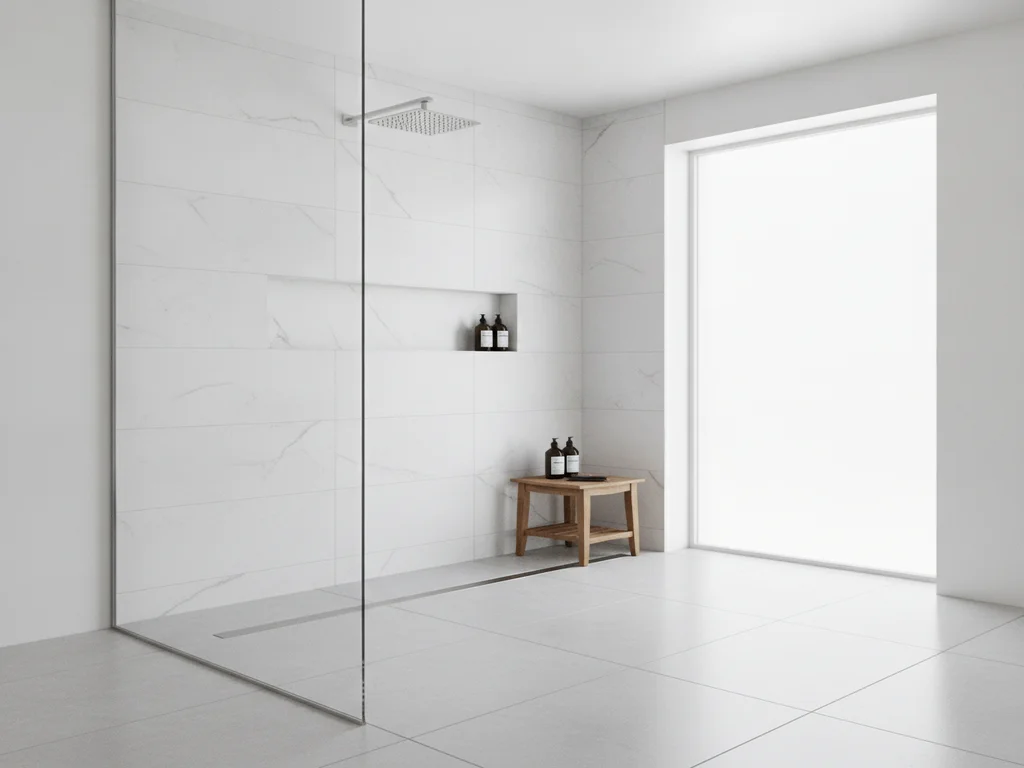
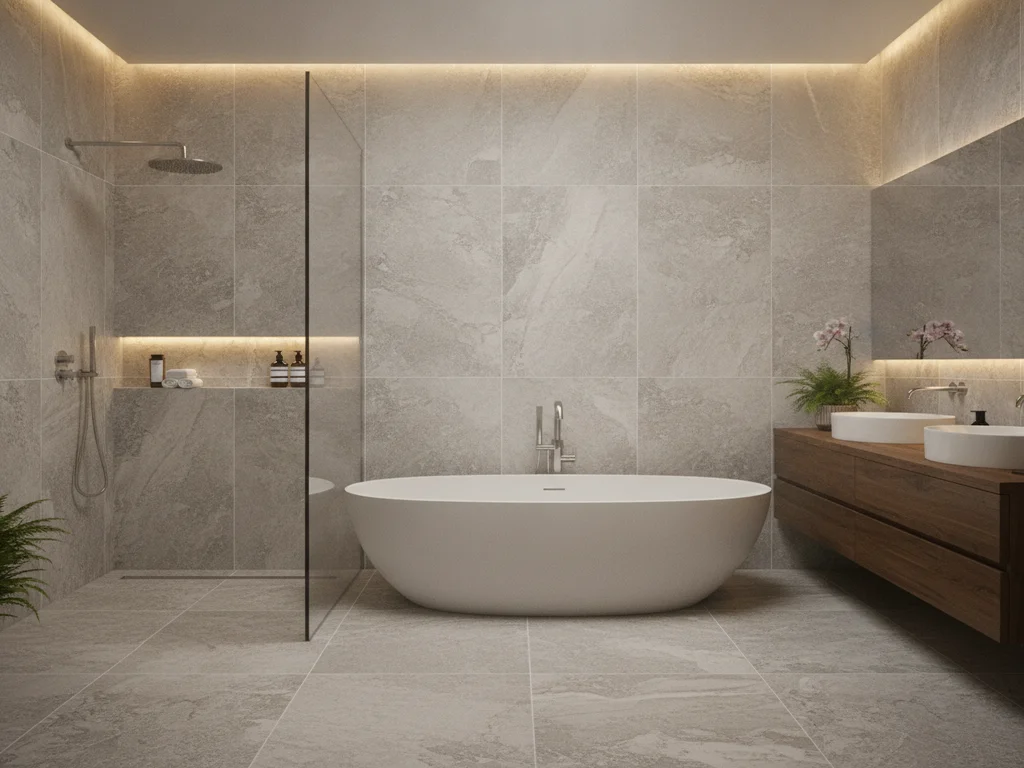
A wet room conversion waterproofs the entire bathroom floor — and often the lower walls — rather than just the shower stall, so the whole room can get wet without a curb, pan, or enclosure holding water back. That openness is exactly why the build differs from a standard shower: the membrane, the slope, and the drain all have to work together across a much larger area than a typical shower pan covers.
Camas Bath doesn't publish a standalone wet room rate — it's a full-room waterproofing scope rather than a single fixture, so the honest way to frame it is against cited national data for what that scope typically runs. This guide gathers figures from Today's Homeowner and Fixr, plus qualitative detail from Bob Vila, and adds what changes when that full-room membrane sits in a climate where seasonal humidity, not scarcity of water, is the design pressure.
Key facts
- Camas Bath has no standalone wet room price; its closest published ranges are $12,000–$22,000 for a custom tile shower and $15,000–$28,000 for a guest bath, before Camas’s 8.8% Q4 2026 sales tax (Washington DOR rate table).
- A full wet room costs $14,000–$22,000 installed nationally in Fixr’s disability-remodeling cost data (Fixr, 2025).
- HomeServe estimates a new wet room at an average of $21,600, about 20% more than an $18,000 traditional bathroom of the same size (Today’s Homeowner, 2025).
- Under the ADA Standards, a standard roll-in shower is at least 30 inches deep by 60 inches wide, with a threshold no higher than ½ inch (U.S. Access Board).
Key takeaways
- Camas Bath doesn't publish a standalone wet room rate — it's a full-room waterproofing scope that sits near our Walk-In/Custom Tile Shower ($12,000–$22,000) and Guest Bathroom Remodel ($15,000–$28,000) categories.
- HomeServe puts wet room installation at an average of $21,600, and Homes & Gardens puts converting an existing bathroom at $11,000–$18,000 (both via Today's Homeowner, 2025).
- Fixr (2025) separately prices a full wet room at $14,000–$22,000, in line with the conversion figure above.
- A wet room waterproofs the entire floor and often the walls — which is why cost scales with room square footage, not just shower footprint, and why the membrane and exhaust fan matter even more in a wet Northwest climate.
- Washington sales tax (roughly 8.0%–9.0% depending on the address in Clark County) applies to labor and materials on top of the national ranges above.
The short answer
Today's Homeowner (2025) collects two national figures: HomeServe puts wet room installation at an average of $21,600 — roughly 20% more than a traditional bathroom remodel — and Homes & Gardens puts converting an existing bathroom into a wet room at $11,000–$18,000.
Fixr (2025) prices a "full wet room" specifically, as part of its disability/accessible remodeling cost data, at $14,000–$22,000 — a figure that lines up closely with Today's Homeowner's conversion range and average. Bob Vila (2021) doesn't publish a cost figure at all, noting only that waterproofing every surface "from top to bottom can get expensive." Taken together, the cited ranges point to a project that typically runs from the low five figures into the low twenties, not a small add-on cost.
Why does full-room waterproofing raise the cost of a wet room?
In a standard bathroom, only the tub and shower walls need to be truly waterproof. Today's Homeowner (2025) explains that a wet room is different: "all walls, and potentially even ceilings, need to be waterproof," which means waterproof paint and wallboard rated to repel moisture extend across the entire room, not just the wet zone. That is the core reason a wet room costs more than a comparable shower remodel — the membrane work multiplies with the square footage of the room, not just the shower footprint.
Bob Vila (2021) frames the same tradeoff from the finish-material side: because every surface has to hold up to water, "there is a limit on the types of materials and home decor used in the bathroom," and the extensive tiling this requires is itself a meaningful share of the cost.
How does a wet room floor drain without a curb?
Because there is no shower pan or curb to contain water, the entire wet room floor has to carry water to a drain by slope alone. Today's Homeowner (2025) describes this directly: "the floor will be gently sloped in the direction of the drain." Bob Vila adds that you need to make sure there is a barrier — usually a step — between the wet room and the rest of the house to keep water inside.
That drainage design is the same engineering question a curbless shower has to solve, just applied across a whole room instead of a single stall — which is part of why a wet room conversion typically costs more than a curbless shower alone. For a side-by-side look at the tradeoffs, see wet room vs. walk-in shower.
Can part of a wet room stay dry?
Not every wet room is fully open. Bob Vila (2021) describes designs that use "a glass wall with a glass door to divide a bathroom into a wet room side (with shower, sink, and tub) and a non-wet room side," or "a partial glass partition separating the shower from the toilet and sink." Today's Homeowner (2025) frames the same choice as confining "spray from the shower to the portions of the bathroom served by the drains."
A glass partition adds cost over a fully open layout, but it keeps towels, a vanity, or a toilet area dry — a detail that matters even more here, where indoor humidity already trends higher across our wet season than it does in a dry-climate market. Confining spray with a partition, and running a correctly sized exhaust fan afterward, keeps moisture from migrating past the wet zone into surrounding drywall and framing.
| Scope | Cost | Source |
|---|---|---|
| Wet room installation, average | $21,600 (~20% above a traditional bathroom) | HomeServe, via Today's Homeowner (2025) |
| Converting an existing bathroom | $11,000–$18,000 | Homes & Gardens, via Today's Homeowner (2025) |
| Full wet room | $14,000–$22,000 | Fixr (2025) |
Sources: Today's Homeowner, "What Is the Wet Area in a Bathroom?" (updated 2025); Fixr, "Cost to Remodel to Adapt for a Disability" (2025). Figures are national — a Clark County wet room conversion typically lands within this band depending on room size and finish level, before Washington sales tax.
Accessibility is a side benefit, not the whole story
Today's Homeowner (2025) notes that eliminating "high tub edges" is a real advantage of a wet room — "as we age, stepping over a tub edge or shower tray can become a difficult and even hazardous proposition" — the same flush-entry logic behind a curbless shower. But a wet room is a design choice built around openness and a specific look, not a substitute for an accessibility-focused remodel. If barrier-free access is the primary goal rather than the aesthetic, our accessible bathroom remodel cost guide covers grab-bar blocking, clearances, and comfort-height fixtures more directly.
What Camas Bath publishes
Camas Bath doesn't publish a standalone wet room rate — it's a full-room waterproofing scope that sits between our published categories rather than inside one of them. Our Walk-In / Custom Tile Shower category, published at $12,000–$22,000, covers a comparable shower build but not full-room membrane work; our Guest Bathroom Remodel category, published at $15,000–$28,000, is closer in overall scope since it touches the whole room. Based on the cited national data above, expect a Clark County wet room conversion to land in that same general band, with the exact number driven by room size, whether a glass partition is included, and how much of the existing floor structure needs to change to build in slope. Washington charges retail sales tax on both labor and materials for remodeling work — roughly 8.0%–9.0% depending on the address in Clark County (Washington Department of Revenue) — so add that to any total before comparing it against the national figures above. For the full picture, see our bathroom remodel cost guide and our wet room conversion service page.
1-year workmanship warranty
Every wet room we build is backed by a 1-year workmanship warranty on our construction, in addition to manufacturer warranties on the waterproofing membrane and drain components we use.
Frequently asked questions
- How much does a wet room cost in Camas or Vancouver, WA?
- Camas Bath doesn't publish a standalone wet room rate — it's a full-room waterproofing scope, not a single fixture. Nationally, HomeServe puts wet room installation at an average of $21,600 and Homes & Gardens puts converting an existing bathroom at $11,000–$18,000 (both via Today's Homeowner, 2025), and Fixr (2025) prices a full wet room at $14,000–$22,000. Expect a Clark County project to land in that same general band, plus Washington sales tax of roughly 8.0%–9.0% depending on the address.
- Why does a wet room cost more than a regular shower remodel?
- A wet room waterproofs the entire bathroom floor and, per Today's Homeowner (2025), potentially the walls and ceilings too — not just the shower stall. That membrane work scales with the size of the whole room rather than a single shower pan, which is the main reason the cost runs higher than a comparable curbless shower alone.
- Does a wet room have to be fully open, with no dry area?
- A wet room does not have to be fully open. Bob Vila (2021) describes wet room designs that use a glass wall and door, or a partial glass partition, to keep part of the room — like a vanity or toilet area — dry while the shower zone handles the spray. Confining spray this way also limits how far moisture migrates in a wet climate, which is a practical reason to consider a partition here.
Sources
- Today's Homeowner — What Is the Wet Area in a Bathroom? (updated 2025)
- Fixr — Cost to Remodel to Adapt for a Disability (2025)
- Bob Vila — The Pros and Cons of Wet Room Bathrooms (2021)
- TCNA — Handbook for Ceramic, Glass & Stone Tile Installation
- U.S. Access Board — ADA Ch. 6: Bathing Rooms
- Washington Department of Revenue — Local Sales & Use Tax Rates
Claims and figures are drawn from the sources above and provided for general guidance; your project may vary. For a fixed price on your specific bathroom, request a free estimate.